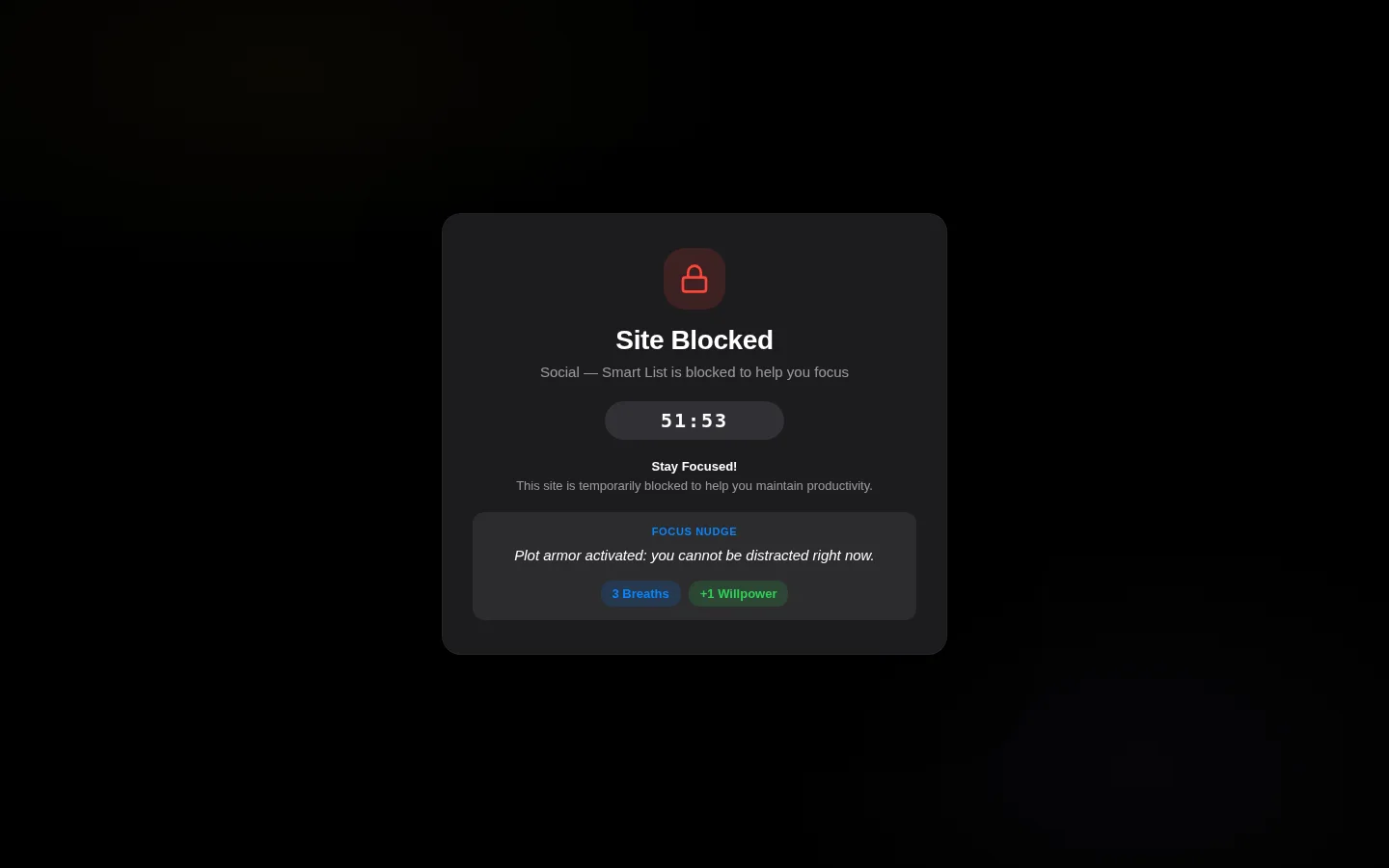
Implementation intentions — specifying when, where and why before an action — doubled goal follow-through in Gollwitzer's original studies. FocusTube borrows the mechanism for video.
The gap between wanting and doing
In 1999, Peter Gollwitzer formalized a deceptively simple finding: people who commit to a specific plan — "I will do X at time Y in place Z" — follow through at dramatically higher rates than people with equally strong but vague goals. The effect, named implementation intention, works because a concrete if-then plan delegates the initiation of action from deliberation to the environment. The cue arrives; the plan fires.
Autoplay is an implementation intention designed by someone else. "When this video ends, the next one begins" is an if-then plan YouTube wrote for you. Watch Intent exists to put a competing plan in front of it, authored by you, seconds before the contest begins.
One prompt, twice a decision
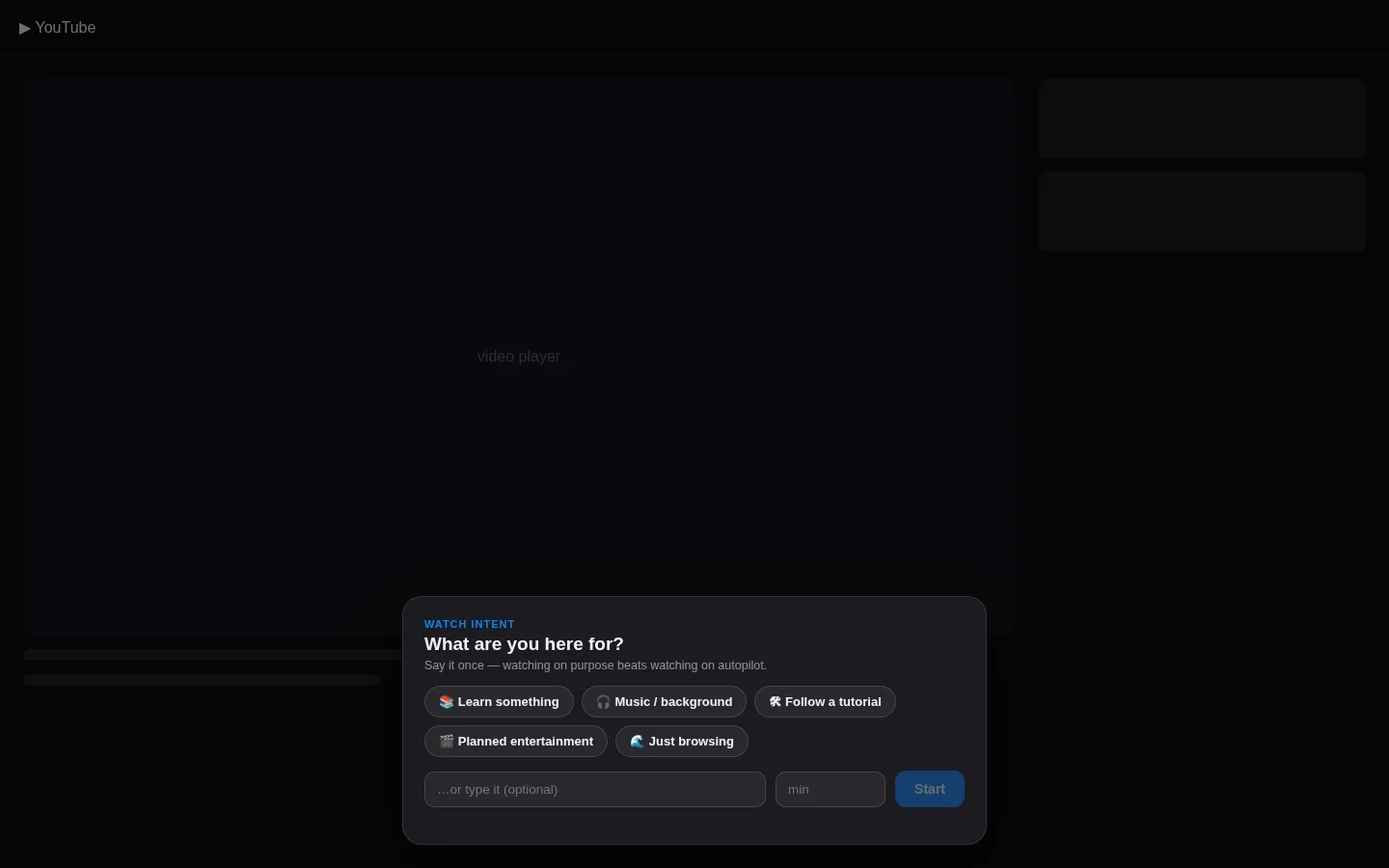
On a YouTube watch page, FocusTube asks once: what are you here for — learning something, music, following a tutorial, planned entertainment, or just browsing? And for how many minutes? The question takes four seconds. Its power isn't in the answer but in the asking: the moment of stating a purpose is the moment watching stops being ambient.
"Just browsing" is treated with respect rather than scolding. It starts an honest mindful countdown, and when it expires, the prompt returns — the re-ask is the feature. Infinite sessions survive by never being re-decided; Watch Intent schedules the re-decision.
Measuring honesty: Intent Match
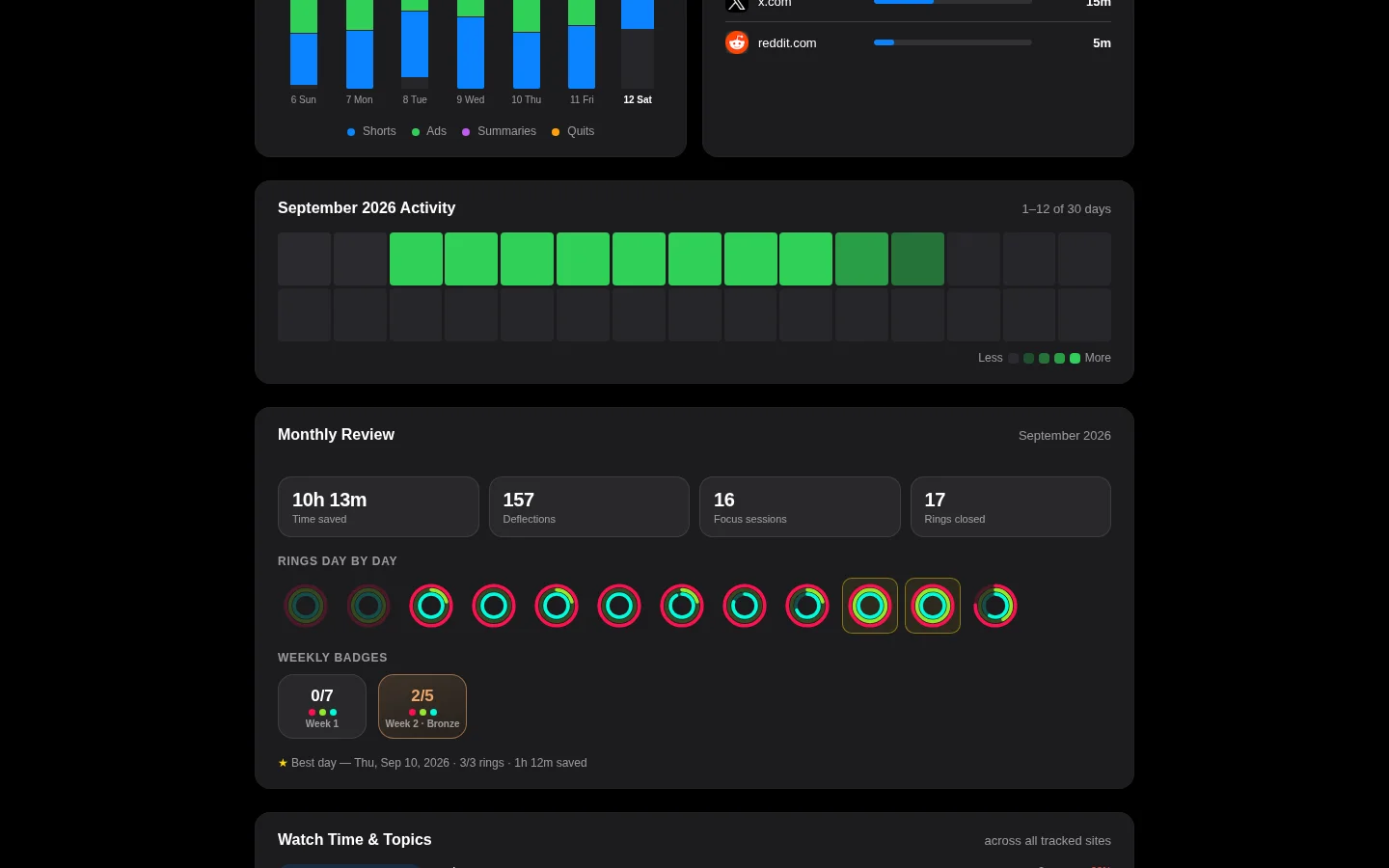
Stated intentions would be worthless if they vanished after the prompt. Every session is checked against its declaration, and the dashboard surfaces the share that ended on-purpose as the Intent Match rate. The number is deliberately gentle — a trend line, not a grade — because the goal is a rising ratio over weeks, not a perfect score today.
There's a second-order effect the research predicted and the product confirmed in internal use: the act of planning a session changes its shape. Sessions with stated minutes end near the stated minutes. The countdown is less a timer than a mirror.
Where intent goes next
The roadmap's top item is wiring Intent Match into the Focus Score as a quality signal — rings currently count behavior, and intent would grade it, making the score sensitive to the difference between a planned lecture and a drifted binge of the same length. That's the direction of the whole project: fewer dumb meters, more mirrors. The question "what are you here for?" is FocusTube in one line; everything else is engineering in service of it.