YouTube is the greatest learning resource ever assembled — wrapped in the most effective distraction machine ever shipped. Both facts are true at once, and that's exactly why blocking tools exist.
The slot machine problem
YouTube's recommendation feed is not evil, and it isn't even badly designed — by its own metric, it's one of the best-designed systems in software history. That metric just isn't your attention span. It's watch time. Every element of the default experience, from the autoplay countdown to the Shorts shelf inserted between you and your subscriptions, is an optimization against a number that grows when you keep watching and shrinks when you stop.
This is what people mean when they call YouTube "a slot machine." Variable rewards — you never know if the next video is the good one — are the same mechanism that makes slot machines profitable. The feed is infinite, the next item is pre-loaded, and the cost of continuing is one unconscious flick of the wrist. None of this requires you to decide anything. That's the design working as intended.
The tool is still worth using
Here's the part most digital-wellbeing takes skip: the same platform hosts university lectures, repair manuals, documentary archives, language teachers, and the single best explanation of whatever you're stuck on at 11pm. Leaving YouTube entirely is a real strategy, and for some people it's the right one. But it trades a solvable problem for a genuine loss.
The honest framing is this: YouTube the library is extraordinary. YouTube the feed is hostile. The feed is not the price of the library — it's a default setting. Defaults can be changed.
Remove the machinery, keep the library
FocusTube's approach is subtractive first. Before any blocking, scoring, or ring-drawing happens, the extension simply removes the machinery of compulsion from the interface: Shorts are eradicated, autoplay is terminated, recommendations and the endless homepage can disappear, comments and end-screen cards go dark. What remains is close to the YouTube of 2009 — a page with a video on it.
Subtraction works because it requires no ongoing willpower. A block you configure once at breakfast defends you at midnight, when the version of you that set it up is not around to be tempted. Environment design beats self-control precisely because it doesn't have to be re-decided.
Then make the remainder deliberate
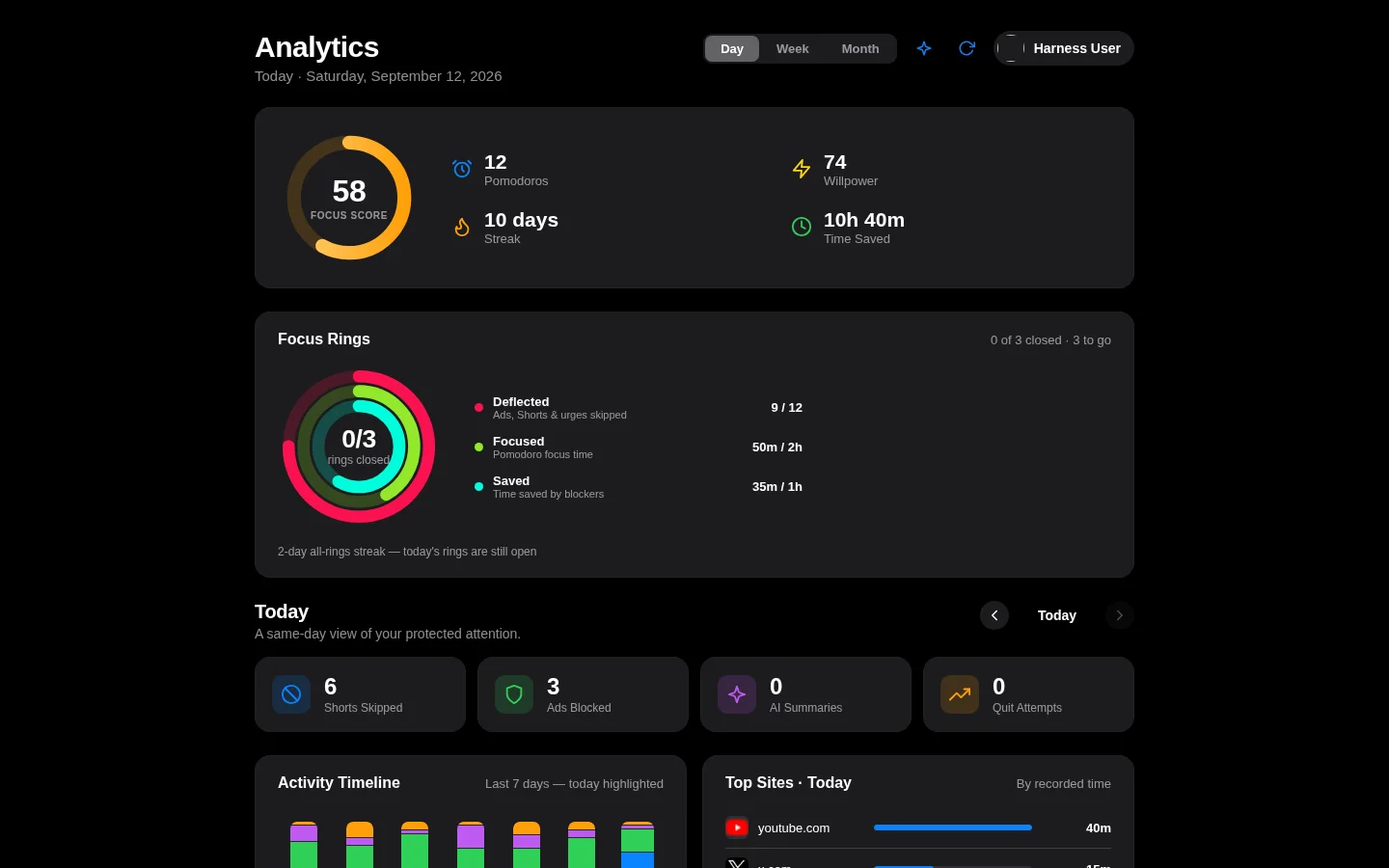
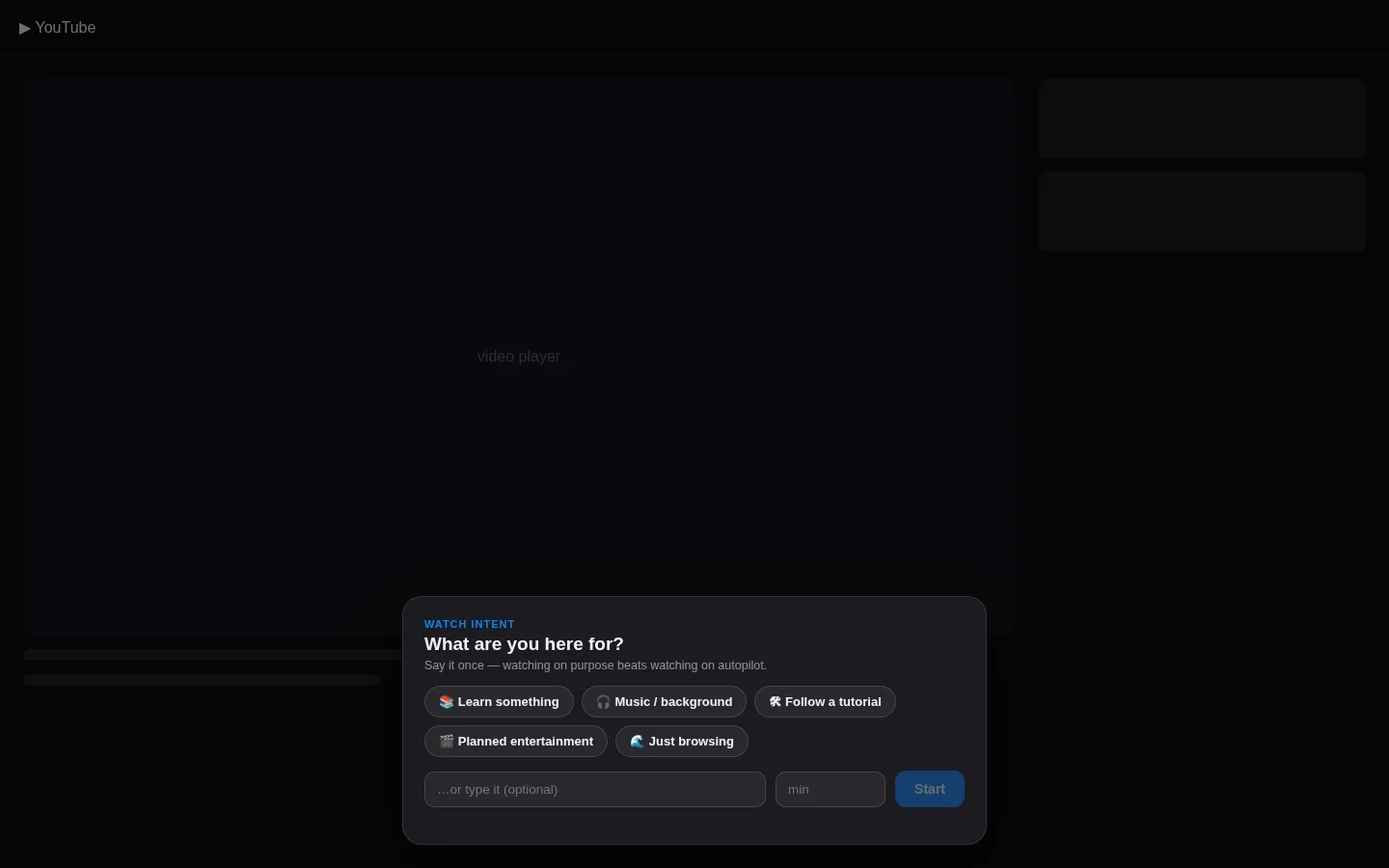
Removing the machinery is half the design. The other half is what fills the space: intention. Watch Intent asks one question before a video starts — what are you here for, and for how long? The daily briefing reshows you yesterday before today can drift. The Focus Rings turn deflected urges and saved minutes into something you can see closing.
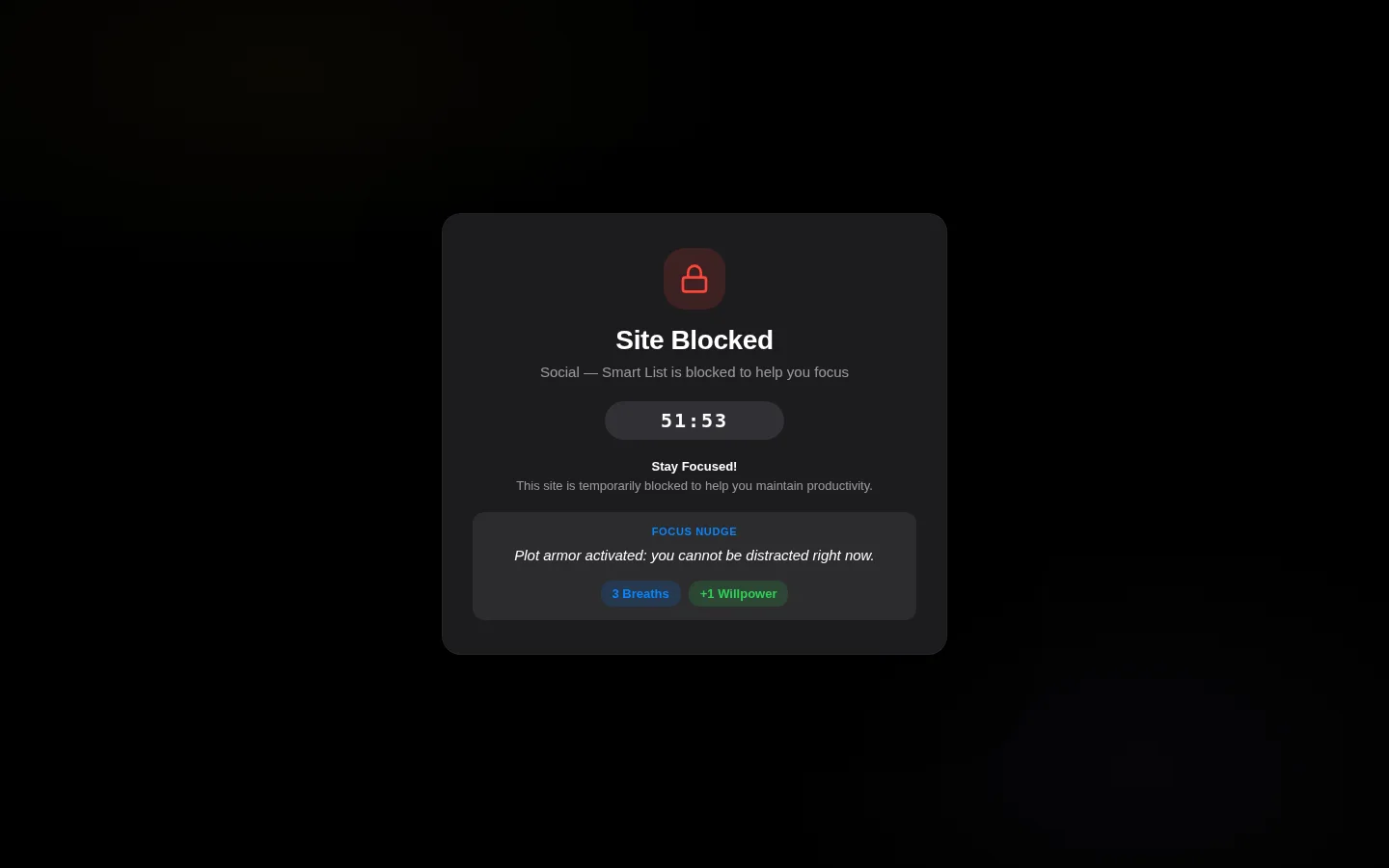
None of these features scold. They inform. A calm interstitial with a countdown is not a punishment; it's a pause long enough for the prefrontal cortex to catch up with the thumb. That pause — a few seconds of friction at exactly the right moment — is where every voluntary decision you'll make today actually lives.
Calm technology, not technophobia
The goal was never "spend less time on YouTube." It's "spend YouTube's time on purpose." Some days that's two hours of a lecture series; some days it's nothing. Both are wins if they were chosen. FocusTube is built on the bet that people prefer chosen experiences to drifted ones — and that the right response to an attention economy is not guilt, but good design.